
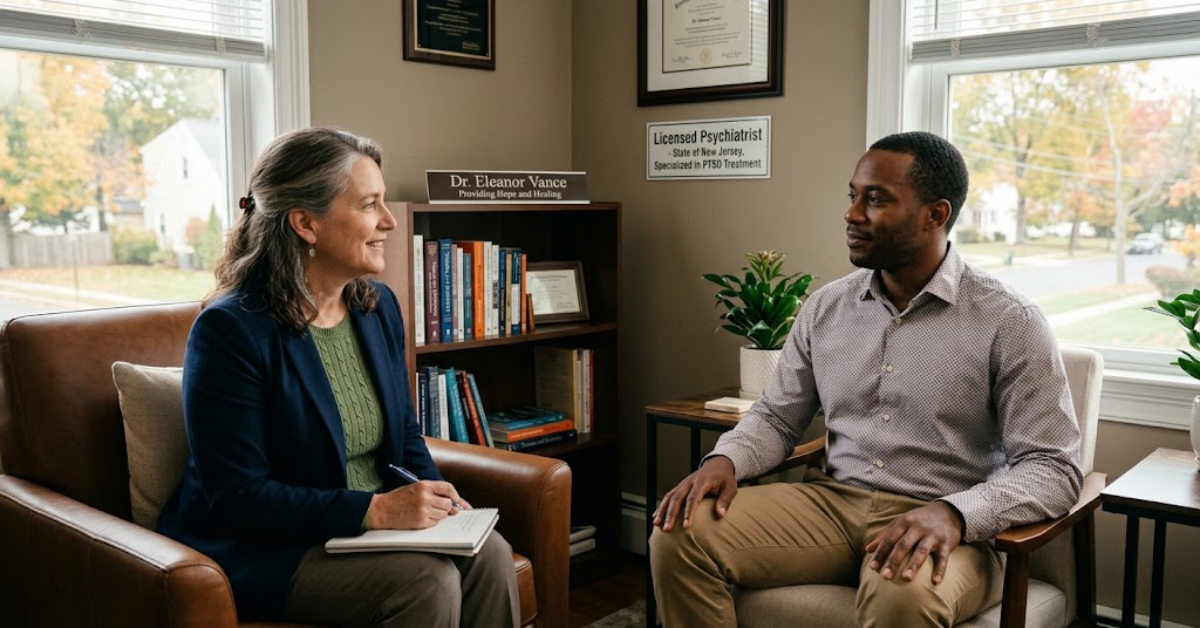
Trauma doesn’t always fade with time. For some people, the memories, nightmares, and constant sense of being on edge keep going long after the event is over. If that sounds familiar, you’re not weak and you’re not broken. You may be dealing with post-traumatic stress disorder (PTSD), and it is treatable.
Working with a psychiatrist for PTSD in NJ can help you understand what’s happening, rule out other conditions, and build a treatment plan that fits your life. This guide explains how psychiatric providers diagnose trauma-related conditions, which treatments they use, and how to start care in Middlesex County.
A note on terminology: “psychiatric provider” here includes psychiatrists and board-certified Psychiatric Mental Health Nurse Practitioners (PMHNPs), both of whom evaluate, diagnose, and manage medication for mental health conditions.
What Is PTSD?
According to the National Institute of Mental Health, PTSD is a condition that can develop after experiencing or witnessing a shocking, frightening, or dangerous event. Many people have strong reactions right after trauma, and most recover over time. PTSD is diagnosed when symptoms last more than a month and interfere with daily life.
Trauma can come from many experiences, including:
- Accidents, injuries, or sudden medical events
- Physical or sexual assault
- Domestic violence or childhood abuse
- Military combat or first-responder work
- Natural disasters
- The unexpected death of a loved one
Signs and Symptoms of PTSD
PTSD symptoms generally fall into four groups:
- Re-experiencing: Flashbacks, intrusive memories, and nightmares
- Avoidance: Steering clear of people, places, conversations, or reminders of the event
- Negative changes in mood and thinking: Guilt, shame, emotional numbness, detachment, or loss of interest in life
- Hyperarousal: Feeling constantly on guard, being easily startled, irritability, trouble sleeping, or difficulty concentrating
PTSD also commonly appears alongside depression, anxiety, panic attacks, and substance use. Learn more about anxiety treatment in Middlesex, NJ and depression treatment and psychiatric support.
If you are in crisis or having thoughts of suicide, call or text 988 (the 988 Suicide & Crisis Lifeline) or go to your nearest emergency room.
How a Psychiatrist Helps With PTSD
1. A thorough psychiatric evaluation
The first step is understanding your full picture. A psychiatric provider will ask about the trauma (only as much as you’re comfortable sharing), your symptoms, sleep, mood, medical history, medications, and any substance use. PTSD overlaps with depression, anxiety, and other conditions, so an accurate diagnosis matters. If you’re unsure what to expect, see our guide to what happens during your first psychiatric evaluation.
2. An accurate diagnosis
PTSD is diagnosed using criteria from the DSM-5, published by the American Psychiatric Association. Your provider will also check whether other conditions are contributing, such as depression, an anxiety disorder, or a sleep disorder, so nothing gets missed.
3. Medication management for PTSD
Medication can reduce symptoms like intense anxiety, low mood, irritability, and poor sleep, which in turn makes it easier to engage in therapy and daily life. A psychiatric provider may consider:
- SSRIs and SNRIs: Sertraline and paroxetine are FDA-approved for PTSD. Venlafaxine is also commonly recommended in clinical guidelines.
- Prazosin: Sometimes considered for trauma-related nightmares.
- Other medications: Added case by case for sleep problems, anxiety, or co-occurring conditions.
Medication is personalized, and it works best with regular follow-up so doses can be adjusted and side effects monitored. Never start, stop, or change a medication on your own. Learn more about psychiatric medication management in Middlesex, NJ.
4. Coordination with trauma-focused therapy
Trauma-focused psychotherapy is a first-line treatment for PTSD, and the National Center for PTSD describes several well-studied approaches:
- Cognitive Processing Therapy (CPT): Helps you examine and shift unhelpful beliefs that developed after trauma.
- Prolonged Exposure (PE): Gradually and safely helps you approach memories and situations you’ve been avoiding.
- EMDR (Eye Movement Desensitization and Reprocessing): Uses guided processing of traumatic memories to reduce their emotional intensity.
Your psychiatric provider can recommend the right type of therapy for you and work alongside your therapist so medication and therapy support each other.
5. Treating sleep, anxiety, and co-occurring conditions
Trauma often disrupts sleep and can show up as panic, depression, or substance use. Treating these problems directly is part of recovering from PTSD, not a separate task.
6. Ongoing support and relapse prevention
PTSD recovery isn’t always a straight line. Follow-up visits give you space to check in, adjust your plan, and prepare for triggers like anniversaries, stressful life events, or news that brings memories back.
Practical Things You Can Do Alongside Treatment
- Keep a steady sleep schedule and limit caffeine and alcohol.
- Move your body regularly, even a short walk.
- Learn grounding skills for flashbacks, such as naming things you can see and hear around you.
- Stay connected with people you trust instead of withdrawing.
- Write down your triggers and early warning signs to share with your provider.
When Should You See a Psychiatrist for Trauma?
Consider getting evaluated if:
- Symptoms have lasted more than a month
- Nightmares or flashbacks disrupt your sleep or daily life
- You avoid people, places, or activities because of the trauma
- You feel numb, constantly on edge, or easily startled
- You’re relying on alcohol or other substances to cope
- Anxiety or depression is getting worse
Getting help early often makes recovery faster and easier.
Trauma and PTSD Care in Middlesex County, NJ
At Mental-Heal, Rosalia Aguilar, PMHNP-BC, provides compassionate, personalized psychiatric care in Middlesex, NJ, serving patients from Edison, Piscataway, Woodbridge, New Brunswick, Old Bridge, and nearby communities. Care is built around your pace, comfort, and goals.
Frequently Asked Questions
What does a psychiatrist do for PTSD?
A psychiatric provider evaluates your symptoms, makes an accurate diagnosis, manages medication when appropriate, and coordinates care with trauma-focused therapy and other providers.
Do I need a psychiatrist or a therapist for PTSD?
Many people benefit from both. A therapist provides trauma-focused talk therapy, while a psychiatric provider can diagnose, prescribe, and manage medication. They work well together.
Is PTSD curable?
PTSD is very treatable. With the right combination of therapy, medication, and support, many people see significant improvement and regain a good quality of life, though recovery looks different for everyone.
What medications are used to treat PTSD?
SSRIs such as sertraline and paroxetine are FDA-approved for PTSD, and venlafaxine is also commonly used. Prazosin may be considered for nightmares. The right choice depends on your symptoms and health history.
How long does it take to feel better?
It varies. Some people notice improvement within weeks of starting treatment, while others need longer. Regular follow-up lets your provider adjust your plan as you go.
Do I have to talk about my trauma in detail at the first visit?
No. You share only what you’re comfortable sharing. The first visit focuses on understanding your symptoms and how they affect your life.
Can PTSD develop years after the event?
Yes. Symptoms sometimes appear months or even years later, often triggered by stress, a reminder, or a major life change.
Can PTSD occur with depression or anxiety?
Yes, very often. A thorough evaluation checks for these conditions so your treatment plan addresses everything together.
Does Mental-Heal offer in-person PTSD and trauma care in Middlesex, NJ?
Yes. Mental-Heal provides in-person psychiatric care in Middlesex, NJ. Call (732) 859-4133 to ask about availability.
Take the Next Step
You don’t have to carry trauma alone. If you’re looking for a psychiatrist for PTSD in NJ, Mental-Heal offers a safe, judgment-free place to start.
📞 Call (732) 859-4133
✉️ Email rosalia@mental-heal.com
Or schedule an appointment today.
This article is for educational purposes only and is not a substitute for professional medical advice, diagnosis, or treatment. If you are in crisis, call or text 988.